Communications is not just press releases, newsletters, or the occasional social media post. Every choice your business makes sends a message: how you answer the phone, how leaders talk to employees, how you explain pricing, how you handle a mistake, and how consistently you appear in public. Strategic communications helps you make those messages intentional, aligned, and useful instead of leaving them to chance.
A communication strategy gives those messages a clear shape. It helps teams decide what to say, who should hear it, and when it should go out. A marketing communications firm can help organize that work, but the goal is still the same: say the right thing in the right way.
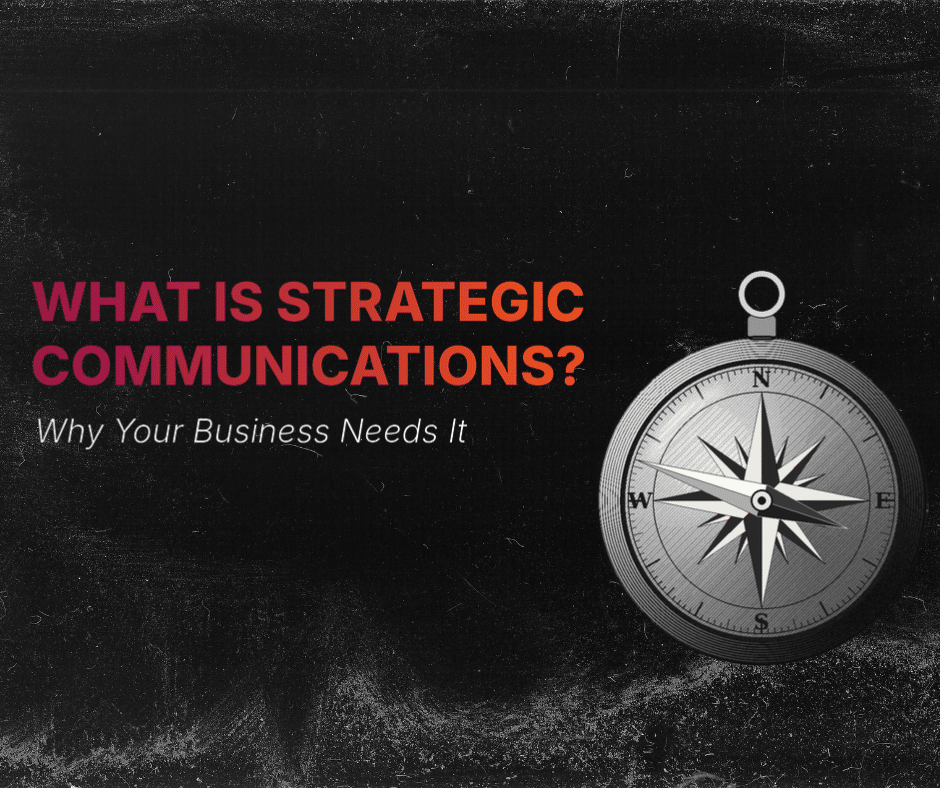
What is Strategic Communications?
Strategic communications is the practice of planning what your business says, who it says it to, why it matters, and how those messages support your larger goals. In plain language, it means communicating on purpose instead of reacting when something needs to be announced.
That purpose is the key. A company can send plenty of emails, post often, and still communicate poorly if those efforts are not tied to a clear communication strategy. Good communication does not mean saying more. It means saying the right things, to the right people, in the right order, through the right channels.
Why Does Your Business Need Strategic Communications?
People make decisions based on what they understand and trust. Customers decide whether to buy, employees decide whether to stay, candidates decide whether to apply, and partners decide whether to work with you.
When your signals are scattered or inconsistent, people fill in the gaps themselves, and that leads to confusion, weak trust, and missed opportunities. Job candidates judge your workplace by your website and reviews, not just the job description. Employees want to know where the business is headed, and silence creates uncertainty. Prospects need to understand what makes you different before they ever reach out. Over time, those repeated messages, and whether your actions match them, become your reputation.
How is Strategic Communications Different From Marketing?
Marketing focuses on creating demand: attracting leads, building awareness, and moving customers toward a purchase. Strategic communications is broader. It covers every audience that matters to the organization, including employees, leadership, the community, and anyone affected by change.
This is where marketing communications, often called MARCOM, comes in. MARCOM brings the two together so your campaigns, brand messages, internal updates, and public statements are not working in separate directions.
For example, marketing may promote a new service. Strategic communications asks whether employees understand it, whether sales can explain it clearly, and whether the message supports the company’s reputation. Whether that work happens with an in-house team or an outside partner, the goal is the same: communication that is not just active but aligned.
Who Are You Truly Talking To?
Many businesses assume communication is mainly about customers. Customers matter, but your business is also communicating with employees, job candidates, investors, board members, vendors, partners, media, and the community.
Each audience has different questions. Customers want to know whether you can solve their problem. Employees want to know whether leadership is being honest. Candidates want to know whether your workplace is worth joining. Strategic messaging helps you answer each group without sounding like a different company every time. The core message stays consistent while the emphasis shifts.
That is why a communication strategy cannot be built only around promotions. Promotions are temporary. Reputation is cumulative.
The Core Parts of A Strategic Communications Plan
A strategic communications plan does not need to be complicated, but it does need to answer the right questions. A strong plan starts with business goals. Are you trying to grow in a new market, attract better candidates, explain a change, or strengthen your reputation? The goal shapes the message.
Next comes audience clarity: knowing who you need to reach and what they already think, need, or misunderstand. Then comes strategic messaging, the core ideas you want people to remember. They should be simple enough to repeat and specific enough to matter.
From there, the plan defines how, when, and by whom messages are delivered. The right channel depends on the audience and the importance of the message. Some messages need to come from a leader, others from managers or customer-facing teams, and clear ownership prevents delays and mixed messages. Finally, the plan defines how success will be measured, so you do not end up celebrating activity instead of progress.
Measuring Communication by Business Results
Posts, opens, clicks, and likes are easy to count, and they can be helpful signals. But they are not the full measure of strategic communications.
The better question is whether communication changed something that matters. Did you attract stronger job applicants? Did employees feel more confident during a change? Did prospects understand your value sooner? Did your reputation hold up when something went wrong? A post with many likes may do little for the business, while a clear internal message during a major change may be far more valuable, even if it never appears in public.
Where Should You Start?
You do not need to rebuild everything at once. Start by reviewing your website, sales materials, hiring content, employee updates, and social posts as if you were seeing the business for the first time. Ask whether they sound connected.
Then find the biggest gap. Maybe your customer message is strong, but your employee communication is thin, or leaders explain the strategy in different ways. Once you see the gap, tighten the message using plain language.
Before any major communication, ask: Who needs to hear this? What do they need to understand, and why does it matter to them? What might they be worried about? Who should deliver the message? How will we know it worked?
Strategic communications is not decoration for your business. It is how your business creates understanding, earns trust, and helps people make decisions. When your words and actions point in the same direction, communication stops being noise and becomes one of the clearest signals of who you are. Because whether you plan for it or not, everything communicates.